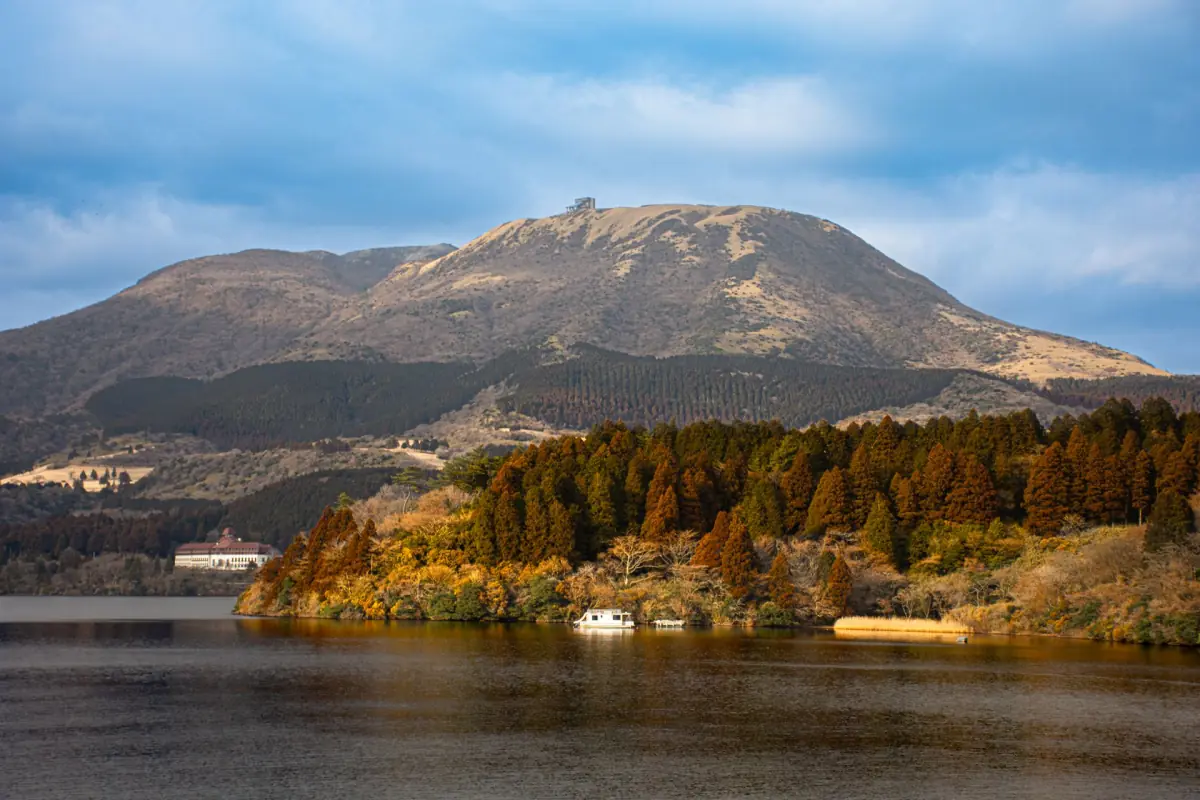
Choosing the best time to visit Lake Ashi
The best time to visit Lake Ashi depends on what would make the day worthwhile for you. Autumn colours, a cruise and a woodland walk have different requirements, and none needs a promised view of Fuji to be enjoyable. Match a season to the experience, then match the actual date to the weather forecast and transport operating information.
The lake sits within the Hakone caldera, with wooded shores and several distinct visiting areas. Moto-Hakone and Hakone-machi provide southern cultural stops; the northern Tōgendai interchange links boat and ropeway travel. Build a plan that can be shortened or changed if wind or fog affects the transport. Our cruise guide explains the separate boat networks.

Lake Ashi weather and the Odawara comparison
The JMA climate figures used here are normals for the comparison station at Odawara for 1991 to 2020. They describe that station, rather than measurements on the lakeshore. Use them for broad seasonal context, without treating an Odawara temperature as the temperature at your lakeside walking route or as a forecast for the day of travel.
Within that comparison record, December has the lowest monthly rainfall and September the highest. January and February are also drier than June and July or September and October. That supports considering the drier winter half of the year for outdoor planning. Rainfall alone, however, does not measure clouds over Fuji or fog at the lake. A comparatively dry month can still include an overcast visiting day.
Forest bathing near the lake
This outdoor session from Hakone-en offers a way to experience the lakeside forest; check the weather for your date.
Hand-picked tours, booked through Viator. Prices are indicative starting prices in US dollars (as of October 2026). Tap a tour for live availability and the current price in your currency.

Lakeside forest bathing
A facilitated woodland activity starting at Hakone-en, with forest admission and a mat included; plan the outdoor session around the day’s conditions.
Spring and summer visits
For spring, plan around a walk, a cultural stop and the available transport, rather than a fixed flowering date. The southern shore offers Hakone Shrine, the cedar avenue and Onshi-Hakone Park as different components of a day. Leave time to enjoy one area instead of using every connection merely to complete a circuit.
June and July are wetter than January and February in the Odawara comparison. For a summer visit, carry suitable rain protection and decide which outdoor stage you would reduce if conditions change. A guided activity still takes place outdoors, so the booking description and the day’s operating advice matter more than the label of the season.
Forest bathing from Hakone-en
The lakeside forest-bathing experience starts at the Hakone-en bus stop. Its included services are a professional Shinrin-yoku facilitator, forest entry admission and a mat. This is a distinct way to spend time in the woodland rather than travelling continuously between viewpoints. The stated activity duration is three hours, so protect that part of the day from an overfull transport plan.
It is a weather-dependent outdoor activity, rather than a seasonal colour guarantee. Arrange your arrival at Hakone-en for the actual meeting instructions; a port on another shore is not the same meeting point. For other walking formats and their starting areas, see Lake Ashi walking experiences.
Autumn colours around the lake
The published foliage window for the ropeway route is roughly late October to mid-November, beginning at Owakudani. This describes that route and does not set an exact peak date for every part of the Lake Ashi shoreline. The different settings are a reason to leave the day flexible, choosing a lakeside walk or a mountain connection according to conditions.
Choose autumn for the landscape rather than a guaranteed photograph. Fuji can remain hidden by cloud, and a photograph showing a clear summit is not evidence of what your day will bring. If you want to stay overnight to spread the visits, compare southern, northern and eastern accommodation areas with the transport you intend to use.
Winter hours, daylight and late-afternoon plans
The ropeway’s published hours are 09:00 to 17:00 from February to November, or 09:00 to 16:15 in December and January, subject to operating conditions. Hakone Sekisho also closes earlier from December through February. Build the day backwards from the attraction or transport service with the earliest closing time rather than relying on the length of daylight alone.
The Onshi-Park observation building closes from 29 December to 3 January; cleaning days also have an earlier closing time. Boat services use seasonal timetables. A late-afternoon scenic description is not a scheduled sunset cruise, so keep the return journey separate from hopes for evening light. Check the arrival and return routes when planning a shorter winter day.
Frequently asked questions
Is there a guaranteed month for Fuji views?
Weather and cloud determine the view. Use seasonal rainfall normals for context, then assess the local weather for your visit.
When is the exact autumn peak?
The ropeway guidance gives roughly late October to mid-November along its route. Plan flexibly for the lakeshore rather than choosing a fixed peak date.
Can I leave the ropeway until sunset?
Use the published seasonal closing hours and the day’s service information. A scenic late-afternoon journey should fit within operating hours and your return connections.