Reading Lake Ashi history along the shore
Lake Ashi history connects a volcanic landscape with routes of worship, travel and control. The lake lies inside the Hakone caldera. Its present form followed the collapse of Kamiyama and the damming of the Hayakawa. That origin helps explain why a visit here can combine a lake landscape with the story of people crossing the mountains, rather than a single isolated monument.
The southern shore brings several strands together. Moto-Hakone gives access to the shrine and cedar avenue; Hakone-machi is the nearby arrival point for the reconstructed Sekisho checkpoint. Onshi-Hakone Park adds the history of the former Hakone Palace. You can focus on these connected places without making the entire mountain crossing. The walking guide separates a local shore visit from the longer Hachiri route.

The shrine tradition and the old road
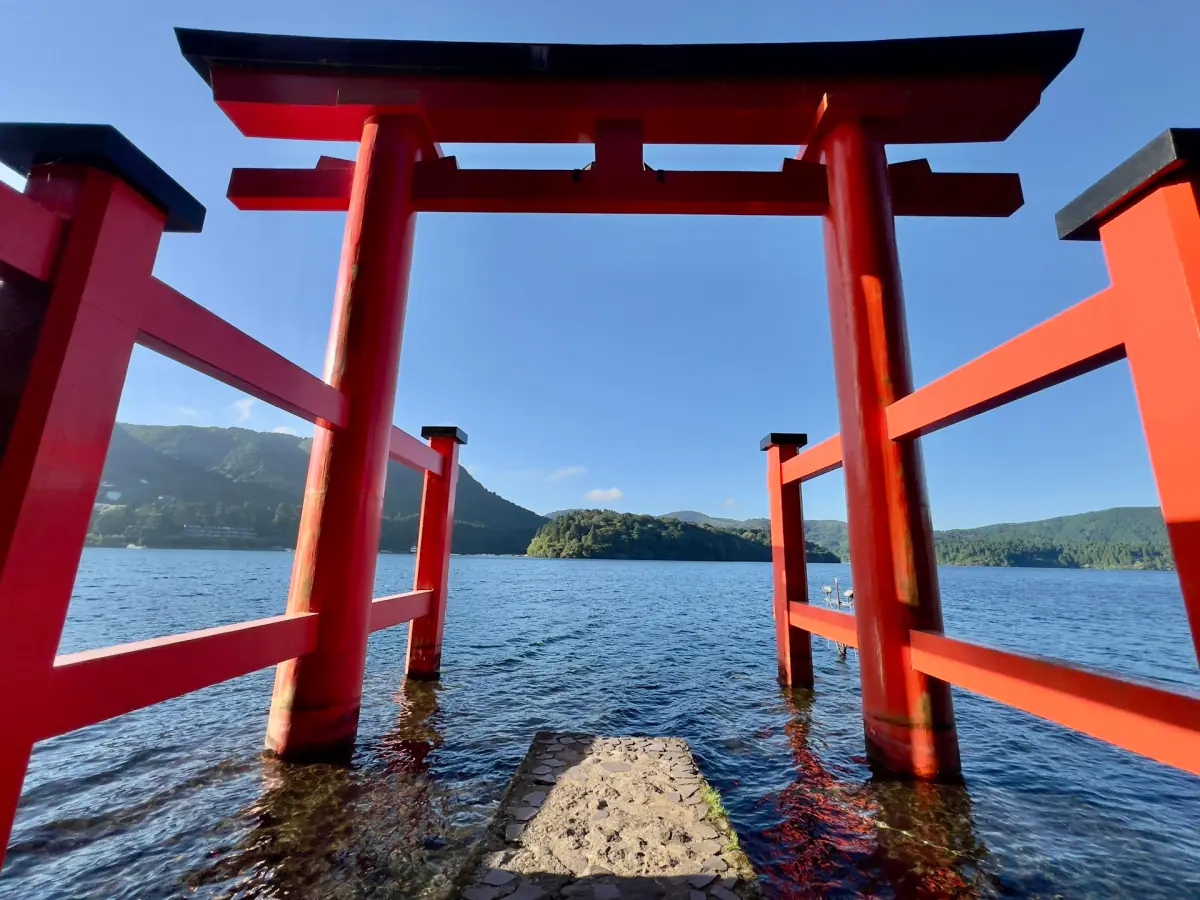
Hakone Shrine attributes its foundation at the present location to Mangan Shōnin in 757. This is a religious tradition, giving the precinct its own historical story alongside the lake's geological formation. The waterside torii and the woodland approach belong to a living place of worship. See the Hakone Shrine visitor guide for the approach, worship etiquette and treasure house.
The cedar avenue between Moto-Hakone and Onshi-Hakone Park extends for approximately 500 metres. Its planting tradition dates to 1618, but that date should not be read as the age of every tree standing today. It forms a short section of the wider old-road setting. Hakone Hachiri is approximately 32 kilometres between Odawara and Mishima, a different undertaking from strolling through the lakeside avenue.
Checkpoint and craft
The guided visit combines the checkpoint with a marquetry demonstration and workshop.
Hand-picked tours, booked through GetYourGuide. Prices are indicative starting prices in US dollars (as of October 2026). Tap a tour for live availability and the current price in your currency.

Checkpoint history and local marquetry
A four-hour cultural outing combines Hakone Checkpoint with a craft demonstration and workshop; the item you make, meals and transport cost extra.
Why the Hakone checkpoint mattered
The checkpoint's establishment or relocation at the present site is dated to around 1619. Its work included inspecting travellers and checking travel documents, particularly for women leaving Edo. Special procedures also applied to announced daimyō processions. Looking at the gates and guard spaces with this purpose in mind makes the place easier to understand: it regulated movement along an important route, rather than serving only as a scenic building beside the water.
Historical architecture and reconstruction
The buildings you visit are a reconstruction. The restoration account describes the use of historical building documents, traditional timber joints, roofing and stone-wall techniques. The site includes Edo and Kyoto gates, guard buildings, a stable and an observation post. Its full reconstruction dates to 2007 in the local guide description. Notice how the arrangement of structures relates to supervision of travellers and the road.
The craft outing starts at Hakone-Yumoto station and lasts four hours. A guide, a live yosegi-zaiku demonstration, a checkpoint visit and a workshop are included. The object made in the workshop is charged separately according to the piece selected. Food and drinks are extra, as is travel to and from the tour location. It suits a day centred on local culture, with time for making something as well as visiting historical buildings.
Sekisho admission and opening hours
The checkpoint publishes admission of 500 JPY for adults and 250 JPY for elementary-school children. With the Hakone Free Pass or an eligible coupon, those amounts are 400 JPY and 150 JPY. These are published undated visitor tariffs. Opening is 09:00 to 17:00 from 1 March to 30 November, and 09:00 to 16:30 from 1 December to the end of February. Last entry is 30 minutes before closing; the facility suggests about 45 minutes for a visit.
Allow time for the approach as well as the exhibition. The checkpoint is approximately five minutes on foot from Hakone-machi pirate-ship port and two minutes from the separate Sekisho-ato Yūsen port. The boat guide explains those distinct networks. Inside the checkpoint, avoid eating, drinking and smoking, and take your rubbish away with you.
Palace history at Onshi-Hakone Park
The park's Lakeside Observation Building presents the planning and construction of the former Hakone Palace. It also has an upstairs balcony and rest space. Building entry is free, with published opening of 09:00 to 16:30, closing an hour earlier on cleaning days. It closes from 29 December to 3 January and has no lift. Plan the building visit separately from time outdoors in the park.
Finish with the lake itself: the shore path, Bentennohana viewpoint and observation-building balcony offer different places to pause. Visibility of Mount Fuji depends on conditions. For a day joining the park, checkpoint and shrine, choose your return port or bus stop before extending the walk. Our transport guide helps connect the southern shore with Hakone-Yumoto and Odawara.
History questions
Are the checkpoint buildings original?
They are reconstructed buildings using historical evidence and traditional construction techniques. The local guide description dates the full reconstruction to 2007.
Is the cedar avenue the whole Hachiri route?
The avenue is a short lakeside section of approximately 500 metres. Hachiri describes the much longer route between Odawara and Mishima.
Does the craft tour include lunch?
Food and drinks are extra. The guided outing includes the demonstration, workshop and checkpoint visit; the workshop item is also paid separately.